


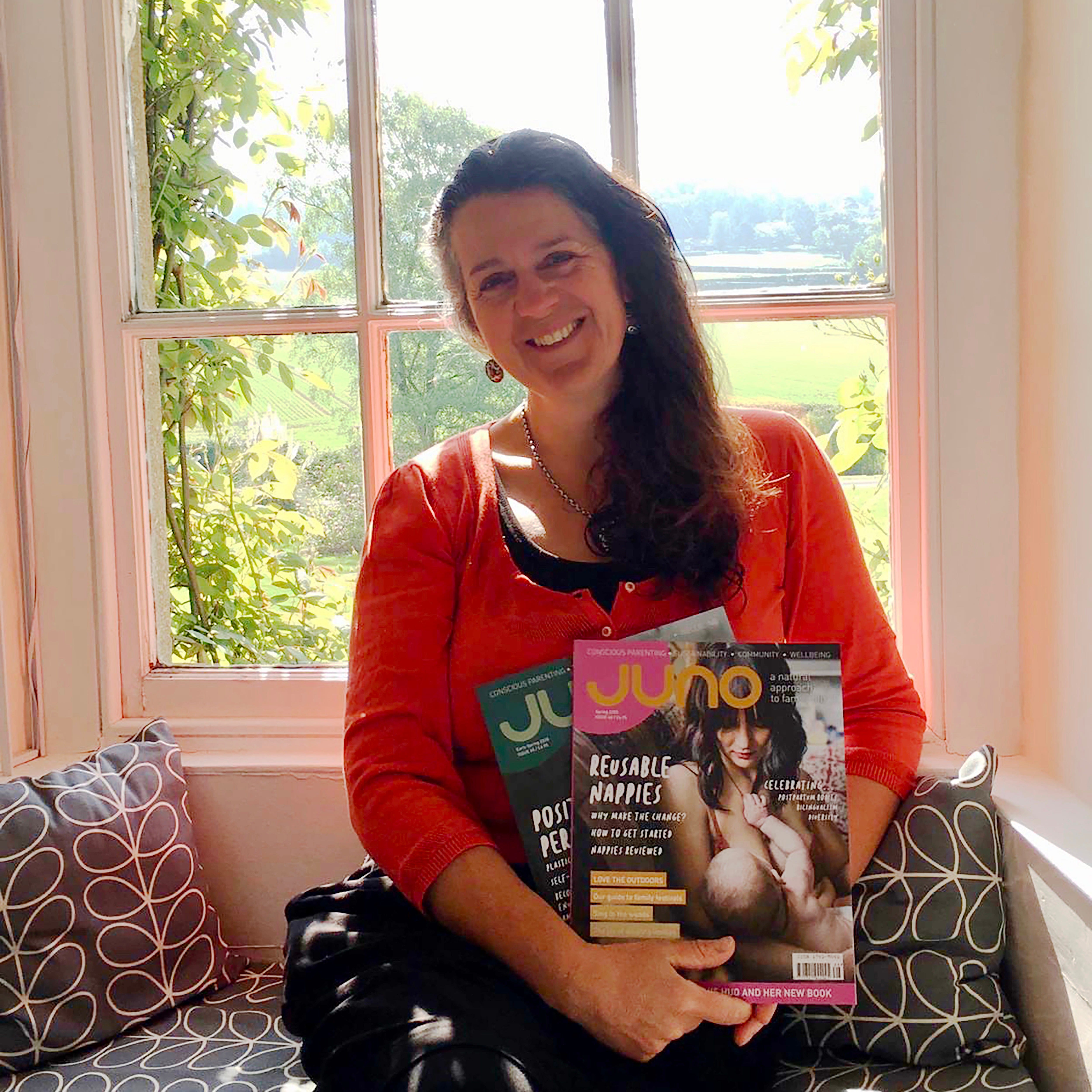
As I reflected on the approaching 100th issue of JUNO, I thought it would be interesting to find out more about Saffia, who has been the editor since issue 23, and I tentatively suggested this to her. The JUNO team thought it was a great idea and so today I have the privilege of writing a very special ‘featured contributor’ section for Saffia. If you are a regular reader, you’ll know that on the first page of every issue there’s a short profile of two or three contributors, giving you interesting details about their life. It’s fascinating to find out that a writer or artist lives in a yurt, maybe in New Zealand, and collects shells or has many dogs. It’s one of the delights of reading JUNO, that you can enjoy something by someone then follow your interest and learn more and you’ve already connected on some level through their creative work. If I was writing a short bio, it might say something like, ‘Saffia is a creative, the mother of three grown up children and the editor of JUNO.’ Thankfully, I have a longer word limit!
It is clear when talking to Saffia how the values of JUNO reflect those of her own life experience. She is a woman who has always said yes to new opportunities, whether it’s dropping a career for a chance to see the world and support her husband, or taking on a parenting magazine with no prior experience.
“I thought I was going to be a corporate lawyer,” Saffia tells me, much to my surprise. With a law degree and postgraduate qualification followed by work experience in one of the big London law firms, it looked like her commitment and hard work was paving the way for a fulfilling career. Then one day her partner (now husband), Matthew, asked if she would come to Egypt with him for his latest project as a water consultant and she thought, ‘Why not?’ She left her job and watched as a brand new path opened up before her.
“Life went at a complete right angle. I was going to be a corporate lawyer. From working 24 hours a day, I was suddenly a housewife.” Rather than sharp suits and the pressure of corporate life, Saffia found herself walking to the local market in 40 degrees, choosing fresh produce and learning to make bread. Saffia had plenty of free time and started writing a journal alongside the long emails being sent home to friends and family, leading to suggestions she should write a book.
The couple came home and got married in 2003 and then left the UK almost immediately, this time for Denmark, with Saffia expecting their first baby. “In deciding to move, I balanced risk and love. I wanted to be with Matthew at this momentous time in our lives, but not to the detriment of our child.” Shortly after their stint in Denmark, Matthew and Saffia were posted to Kyrgyzstan, which Saffia reflects on as an unusual but refreshing place to spend your first pregnancy. “Unlike at home, I wasn’t bombarded with pregnancy advice.” In fact, it was quite the opposite; antenatal care was very basic. “I did have a scan but only because I accosted a stranger with a baby in a supermarket and asked her who her doctor was. She introduced me to Dr Bucket, an eccentric man who conducted his examinations with a cigarette behind his ear.” The doctor spoke no English and after his examination he gave the bemused couple a thumbs up to let them know all was well. Saffia laughs. “He did tell us the sex of the baby – not that we wanted to know. ‘Penis, scrotum,’ he blurted, seemingly his only words of English.”
She delayed going back to the UK for as long as possible, but did give birth to their first son in the UK, with Matthew beside her, before heading back to join him in Kyrgyzstan with their 15-week-old. Saffia loves reflecting on this global start to mothering. Her unusual and uplifting experience was eventually to become Revolution Baby, her self-published book, in which her ‘why not’ approach takes centre stage, becoming a parent during the tumultuous times of the Kyrgyz Tulip Revolution.

At around this time, Saffia had her first contact with JUNO, writing an article about her parenting experiences in the former Soviet outpost, which was accepted and published by JUNO’s founder and editor, Patricia Patterson-Vanegas. Saffia was sending out articles speculatively to many publications, with some success, and she continued to do so after she came home to England to have their second son. In 2008, their daughter was also born. Like many mums, Saffia spent time writing in between her busy life as a mother of three.
It was in the spring of 2010 that an unexpected email arrived from Patricia. Patricia was ready to move on from JUNO and she was unsure what was going to happen to the magazine. Saffia wondered why Patricia was telling her this and discussed it with Matthew; maybe this was her next challenge. She could put her time into creating JUNO rather than sending submissions to magazines and newspapers and being (mostly) ignored or rejected. Saffia’s thinking prompted her to pick up the phone. Communication began, and this eventually led to Saffia and Matthew becoming the custodians of the magazine.
In the first issue they produced, Saffia wrote, “I am both excited and nervous about the responsibility of bringing JUNO to you. I feel a strong duty to continue the excellent and thought-provoking content and I look forward to working with the committed team of contributors Patricia has established.”
Much like Saffia’s leap from corporate life to global housewife, learning and feeling her way in a new world was also the case with JUNO. “I would never have predicted this; I have just gone with it in my life and that’s how I came to JUNO.” There was an extensive handover with Patricia and the team, and Saffia put in place a structured format and schedule – the original content plan is still in use!
It may come as a surprise to you to hear that Saffia creates JUNO in her spare time. From the very start, JUNO has been a passion project created around her full-time work running the family business with her parents. She credits the brilliant team that enable the magazine to be made and allow for this demanding work schedule. After 16 years she says, “I still love the creativity of it and I am still learning from families.
“I am grateful to what JUNO has brought to me and my family. We have had some extraordinary experiences.” One of these was the opportunity to attend the amazing Tribal Hearts Festival, which she says wouldn’t have happened it if hadn’t been for JUNO. Producing the magazine also introduced her to using menstrual cloth pads and sponges, which she’s not sure she would have encountered otherwise. “I have met, worked with and learned from some incredible people across the world – some I’m still in touch with, and I’m very grateful for the relationships I have made through JUNO. Those people, those voices, have shaped me as a person and as a parent.” She describes her editorial role at JUNO as “life changing”. “I still receive articles and think, ‘Oh wow!’ I’m learning still – from every issue. There is always so much to reflect on.”
parents are having to deal with things that I didn’t, and that makes the voices JUNO brings more important than ever
Saffia’s enthusiasm for the content and the incredible creativity JUNO brings into the world remains huge, but she concedes that times have changed since she became a parent back in the early 2000s. “Parents are having to deal with things that I didn’t, and that makes the voices JUNO brings more important than ever.” Saffia and the team have worked to make the content relevant to all parents, and to make the magazine inclusive rather than exclusive. However, she is beginning to feel that now her children are grown and she is no longer immersed in those early years that maybe the editor of JUNO does need first-hand experience of some of these new and tricky issues. “I want it to be that space for people and I would happily pass the baton on to the me of 15 years ago.”
Saffia’s creativity and work ethic have produced a magazine with a varied voice, thought-provoking content and beautiful imagery. She’s now thinking about the conversation Patricia began with her at the start of her own parenting journey and wondering who might like to continue that conversation with her. Is there a future editor among the readership who can take JUNO out to the world and embrace the changing face of parenting? If the words ‘why not’ are rising to the surface as you read this, Saffia would love to hear from you. It might be the start of something new and wonderful for you.
Angeline Braidwood lives in Suffolk on a smallholding with her husband, two daughters and ever-expanding menagerie. She loves to write about inspiring people, family life and saving the world. On Instagram @angeline_writes
You can contact Saffia at editor@junomagazine.com